Prediction Markets vs Sportsbooks
How prediction markets work compared with sportsbooks, the pros and cons of each, and what bettors should know about limits.
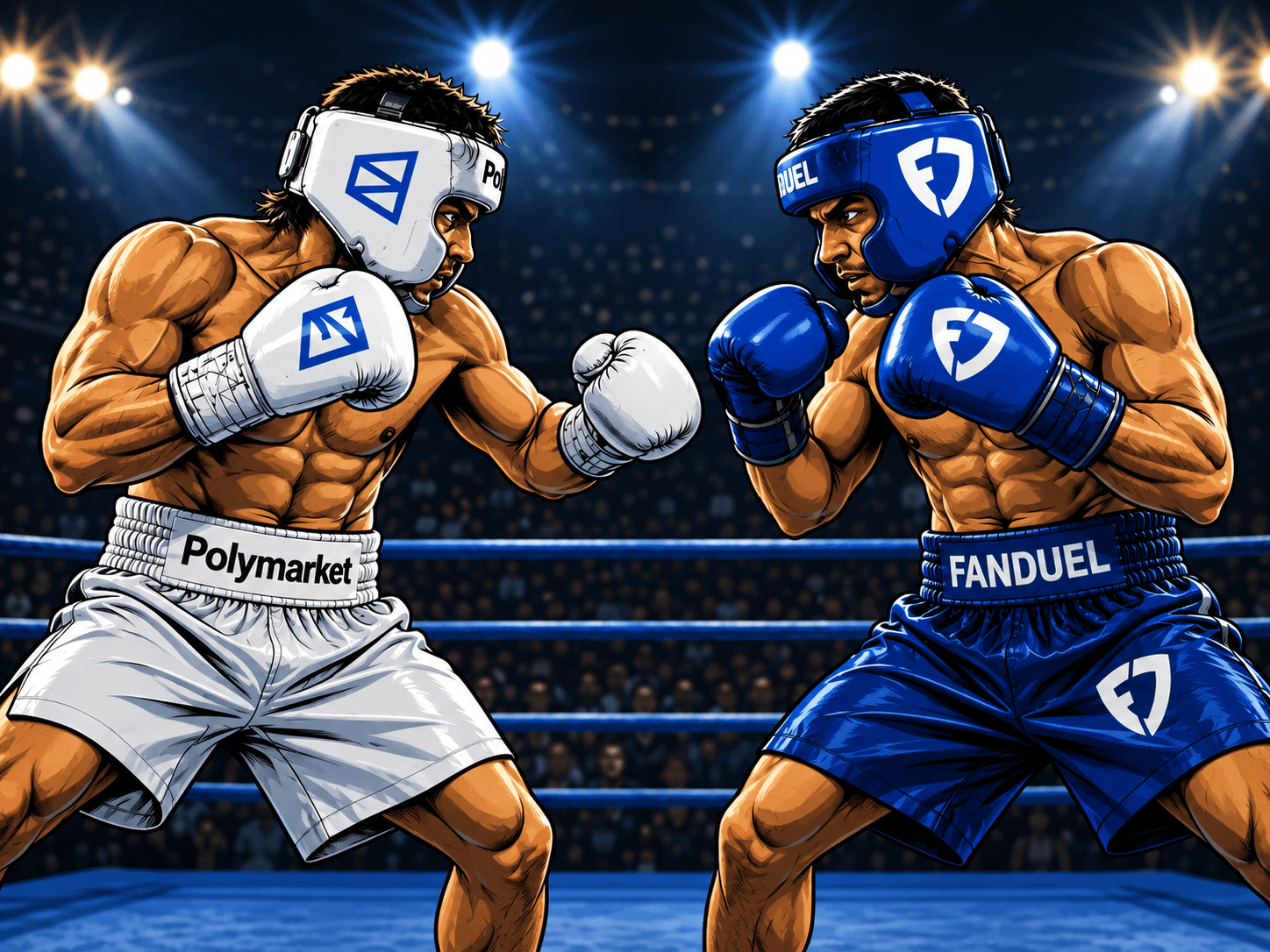
Sportsbooks and prediction markets can offer exposure to the same game, but the transaction underneath is different. At a sportsbook, you place a wager against prices offered by the operator. On a prediction market, you buy or sell contracts in a market where prices are formed by participants trading with one another.
How a sportsbook works
A sportsbook publishes odds for each outcome. If you bet $100 at +150, the book agrees to return your $100 stake plus $150 in profit if you win. If you lose, the sportsbook keeps the stake. The book is effectively your counterparty and adjusts its odds, maximum stakes, or market availability to manage risk.
Sportsbook prices include margin, commonly called vig or juice. The implied probabilities on every side typically add up to more than 100%, and that excess is the operator's built-in mathematical advantage.
How a prediction market works
A prediction market lists event contracts, often framed as a yes-or-no question. A YES contract trading at 62¢ generally represents a market-implied probability of about 62%. If the event happens, the contract settles at $1. If it does not, it settles at $0. Fees can affect the final return.
Instead of the platform deciding one fixed price and taking the opposite side, buyers and sellers submit bids and offers to an order book. You may be able to enter with a market order, name your price with a limit order, or sell before settlement. The exchange facilitates and settles the trade.
The same opinion, expressed two ways
Suppose you believe a team will win tonight. Here is how economically similar positions can appear on each platform before fees:
Sportsbook
Team to win at +150
Risk $100 to profit $150. Your total return is $250 if the team wins.
Prediction market
Buy YES at 40¢
Buy 250 contracts for $100. They pay $250 if YES wins, producing $150 before fees.
The biggest difference: who controls your size?
A sportsbook controls bet acceptance. Maximum wagers can vary by customer and market, and the book may accept only part of a proposed bet. Some bettors, especially those consistently finding strong prices, eventually discover that their available stake has been reduced. Not every sportsbook limits every winner, but individual limits are common enough to be a major part of the traditional sportsbook model.
A prediction market generally does not operate by profiling a customer and cutting their size simply because they win. The order book is available to eligible participants on the same displayed terms. If contracts are offered at your price, you can trade against that available liquidity.
“No limits” needs context
Prediction-market capacity is not infinite. A market can have too few contracts available near the displayed price, and a larger order may move through multiple price levels. Exchanges can also impose contract or position limits, and individual markets may have their own caps. The practical advantage is no sportsbook-style stake reduction merely for being a sharp or profitable customer, but that does not guarantee any amount can be filled at one price.
Pros and cons of each
Prediction markets
Pros
- +Transparent bids, asks, and market-driven prices
- +Generally no customer-specific limits for winning
- +Ability to trade out before settlement
- +Limit orders can let you choose your entry price
Cons
- −Thin markets can create slippage or unfilled orders
- −Fewer bet types and player props on some platforms
- −Trading fees vary by platform and order type
- −Position limits and eligibility rules can still apply
Sportsbooks
Pros
- +Deep menus of games, props, parlays, and live markets
- +Simple bet slips with immediate acceptance on many wagers
- +Promotions and odds boosts can create extra value
- +Familiar American, decimal, or fractional odds
Cons
- −The book builds a margin into its prices
- −Many operators can reduce a winning customer's stake
- −The operator may reject all or part of a wager
- −Cashing out early usually comes at an unfavorable price
Which one is better?
Neither format is automatically better on every market. Prediction markets can be attractive when you value transparent pricing, the ability to post your own order, and access that does not shrink because you have been successful. Sportsbooks often have broader menus, more player props, faster execution in popular markets, and promotions that can improve a price.
Price should decide where you trade. Compare the sportsbook odds with the prediction market's executable price after fees and slippage. The best platform is the one offering the highest expected value at the size you can actually get filled.
Compare the price
Convert both formats before choosing
Use the free odds converter to compare a contract price with American or decimal sportsbook odds.
Open the odds converterThis article is educational and does not guarantee availability, execution, or profit. Platform rules and legal access vary by jurisdiction and can change. Always review the current contract terms, settlement source, fees, and limits before trading.
Sources: CFTC prediction-market guide and DraftKings Sportsbook general rules.